
6 Home Remodeling Mistakes That Could Be Haunting Your House

The scary truth about water damage, mold, and home remodeling mistakes.
Halloween is the season for things that go bump in the night.
Creaking floorboards.
Mysterious stains.
Strange smells coming from the basement.
Wait a minute. Are we describing a haunted house… or your house?
At 1d Remedy, we've seen our share of frightening discoveries. And while we haven't encountered any actual ghosts (yet), we've opened enough walls, pulled up enough flooring, and uncovered enough hidden water damage to know that some of the scariest things in a home don't make a sound.
They just sit there, behind your beautiful new tile, beneath your freshly installed floors, or inside that wall someone was absolutely certain was dry. Waiting.
Unlike your average horror movie villain, these problems don't disappear when the credits roll. They can return as water damage, mold growth, damaged materials, and costly repairs.
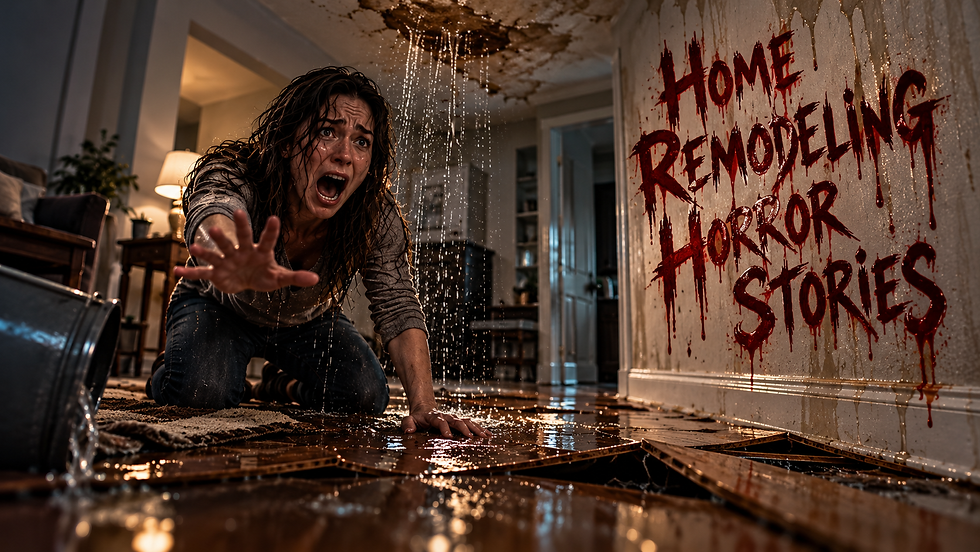
So grab a flashlight, resist the urge to investigate that mysterious basement noise alone, and join us for six home remodeling horror stories that could haunt your house long after Halloween.
1. The Stain That Wouldn't Die
You painted it. You patched it. You thought it was gone. But some things have a way of coming back.
It starts innocently enough. A mysterious brown stain appears on the ceiling. Maybe it's an old leak. Maybe it's condensation. Maybe it's the bathroom upstairs. You grab a can of stain-blocking primer, apply a fresh coat of paint, and admire your handiwork.
Problem solved...or so you think.
Weeks later, the stain returns. Same spot. Same shape. Almost like it never left. Cue the ominous music.
What's Really Haunting Your Ceiling?
Water stains are evidence that moisture has affected a surface, but they don't necessarily tell you where the water originated or whether the problem is still active.
Possible causes include:
Plumbing leaks
Roof leaks
Water entering around windows or exterior openings
Leaking appliances
Bathroom leaks from the floor above
Condensation
Previous water damage that has already been repaired
Here's where the mystery gets interesting. The source of the water may not be directly above the stain. Water can travel along framing, pipes, and other building materials before becoming visible somewhere entirely different. The stain might be in your living room, while the source is several feet away.
Painting over it won't make an active leak disappear. It just gives the problem a fresh disguise.
How to Break the Curse
Before repairing the cosmetic damage, determine whether the moisture source is active and correct it if necessary. Then assess the affected materials, make sure they're adequately dry, and complete the appropriate repairs.
A previously repaired leak may only require cosmetic restoration if the materials are dry and sound. But if water is still entering the home, paint is not an exorcism.
The takeaway: Find the source before making the evidence disappear.
2. The Thing Behind the Wall
The drywall is new. The paint is perfect. But something inside isn't quite right.
Picture this. Your home recently experienced water damage. The leak has been fixed, the damaged drywall has been removed, and the reconstruction crew is ready to put everything back together.
New insulation goes in, fresh drywall goes up, the walls are painted, and the furniture returns. Everything looks beautiful.
But there's one small problem. Nobody confirmed that the materials behind the wall were adequately dry. Now, whatever moisture remained has a lovely new hiding place.
The Monster You Can't See
After water damage, moisture can remain in materials that aren't immediately visible, including:
Wood framing
Insulation
Subflooring
Sill plates
Drywall
Wall cavities
Materials in areas with limited airflow
A wall can appear completely dry on the surface while materials inside the assembly still contain excessive moisture. When susceptible materials remain damp, conditions may support mold growth.
Simply covering damp materials doesn't eliminate the moisture. In some cases, it makes the remaining problem harder to detect and correct.
How to Break the Curse
Before closing walls following water damage, verify that affected materials have dried adequately. Depending on the situation, that may involve moisture measurements, comparison readings, and further evaluation of the affected assembly. The original water source must also be corrected.
The takeaway: A wall isn't ready to close simply because it looks ready. Because the only thing worse than opening a wall once is paying to open it again.
3. The Nightmare Beneath Your Feet
It was the floor of your dreams. Until the nightmare started underneath it.
There's something satisfying about brand-new flooring. The color is perfect, the room feels transformed, and everything looks clean and finished. For a while, life is good.
Then something strange happens. A seam starts lifting, a board begins to buckle, or the edges start to swell. Maybe there's an unusual smell you can't quite identify. Suddenly, your beautiful new floor seems to have developed a personality of its own.
Unfortunately, this probably isn't paranormal activity. It's time to investigate what's happening underneath.
What Lies Beneath?
Before installing new flooring, it's important to understand the condition of the surface underneath it. Depending on the room, that could be:
A concrete slab
Plywood
OSB
A wood subfloor
An underlayment system
If the underlying materials have excessive moisture, new flooring may conceal the problem rather than solve it.
Possible consequences include:
Warping or buckling
Swelling
Adhesive failures
Changes in flooring seams
Persistent odors
Deterioration of underlying materials
Mold growth where suitable conditions exist
Concrete slabs can also present moisture challenges, particularly in basements or areas with a history of water intrusion.
And here's the truly terrifying part: Discovering a moisture problem after installing expensive flooring may mean removing the very material you just paid to install.
That's a plot twist nobody wants.
How to Break the Curse
Before flooring installation, assess the condition and moisture history of the substrate. If there was previous water damage, verify that affected materials are ready for new finishes.
Follow the flooring manufacturer's moisture-testing and installation requirements, and select flooring suitable for the environment.
The takeaway: Don't let beautiful new flooring become a very expensive hiding place.
4. The Shower of Secrets
The tile was gorgeous. The grout was flawless. The waterproofing? Well… that's where the story takes a dark turn.
You finally have the bathroom you've always wanted. Beautiful tile, sleek fixtures, and a shower that looks like it belongs in a luxury hotel. Everything is perfect.
Until water damage appears on the ceiling below. Or the wall beside the shower begins showing signs of moisture. Maybe the flooring outside the bathroom starts deteriorating.
But how? The shower is covered in tile! Surely tile is waterproof. Right?
Not exactly.
The Secret Behind the Tile
One of the most common bathroom remodeling misconceptions is that tile and grout alone make a shower waterproof. They don't.
A shower relies on a properly designed and installed waterproofing system beneath and behind its finished surfaces.
Depending on the shower system, important components may include:
Waterproof membranes
Shower pans or bases
Properly treated seams and transitions
Drain integration
Correctly detailed penetrations
Suitable backer materials
Waterproofing around niches and corners
Appropriate installation methods
When these details are overlooked, water may reach areas it shouldn't. And moisture doesn't always reveal itself right where the problem began.
Water damage from a shower can affect adjacent walls, subflooring, framing, ceilings below, trim, baseboards, and even flooring outside the bathroom. By the time visible damage appears, the underlying problem may have existed for some time.
How to Break the Curse
Treat waterproofing as a critical part of the bathroom remodel, not an optional detail hidden behind the pretty finishes.
At 1d Remedy, our experience with water damage and mold remediation shapes how we approach bathroom remodeling. We understand that the real protection often comes from components homeowners never see once the project is complete. That's why we emphasize moisture-conscious construction and properly designed waterproofing systems.
The takeaway: Pretty tile won't protect you from poor waterproofing. And unlike a ghost, hidden water damage doesn't need an invitation to enter.
5. The Vent to Nowhere
You hear the bathroom fan running. You assume the moisture is leaving. But where is it really going?
Every horror story needs a mysterious disappearance. In this one, it's the steam from your shower.
You turn on the bathroom fan. It hums loudly, the mirror eventually clears, and everything seems normal. But there's a question nobody thought to ask: Where does that fan actually send the humid air?
Because if the answer is "into the attic," we've got a problem.
The Moisture That Never Really Left
Bathroom exhaust fans are designed to help remove humid air produced by activities such as showering. But the fan must be properly installed, connected, and vented outdoors.
If humid air is discharged into an attic or another enclosed area, the moisture hasn't left the building. It's simply relocated. When warm, humid air encounters cooler surfaces, condensation can occur. Over time, persistent dampness may contribute to deterioration and mold growth on susceptible materials.
Other problems can reduce ventilation performance, too:
Disconnected ductwork
Crushed or damaged ducts
Poor duct routing
Undersized fans
Blocked exterior vents
Inadequate airflow
Here's the creepy part. A fan can sound like it's working perfectly while doing a terrible job of removing moisture.
How to Break the Curse
During bathroom remodeling, confirm that the exhaust fan is appropriately sized, properly installed, and vented directly outdoors. Make sure the ductwork is connected and functioning correctly.
If the bathroom remains humid for an unusually long time after showering, investigate the ventilation rather than assuming the fan is doing its job.
The takeaway: Just because you hear the fan doesn't mean the moisture has left the building. Sometimes the call is coming from inside the attic.
6. The Curse of the Finished Basement
They covered the walls. They installed the floors. They made the basement beautiful. But nobody asked why it got wet in the first place.
Ah, the basement. The setting of approximately half of all fictional horror movies, and more than a few real-life remodeling nightmares.
An unfinished basement can be dark, dusty, and a little uninviting. So you decide to transform it. New framing, insulation, drywall, beautiful flooring, and fresh paint. Maybe even a home theater or a cozy family room.
The transformation is incredible. There's just one tiny detail.
Remember that mysterious white powder on the foundation wall? Or the damp corner after heavy rain? What about that musty smell everyone insisted was just a normal basement smell?
Nobody investigated those things before the walls went up. Now they're hidden, and the basement's moisture history didn't magically disappear when the drywall arrived.
What Was Buried Behind the Walls?
Before finishing a basement, homeowners have an opportunity to inspect conditions that may become much harder to evaluate later.
An unfinished basement may reveal:
Foundation cracks
Water staining
Efflorescence (white mineral deposits)
Damp areas
Previous repairs
Signs of past flooding
Moisture at wall-floor joints
Sump system concerns
Deteriorated materials
These clues don't automatically mean a basement has a serious problem, but they may indicate conditions worth understanding before they become concealed.
Basement moisture can have several causes, including groundwater seepage, poor exterior drainage, plumbing leaks, condensation, or previous flooding.
If the underlying condition remains unresolved, covering the foundation with framing, insulation, and drywall can make future problems more complicated to find and repair.
How to Break the Curse
Before finishing your basement, investigate its moisture history.
Ask yourself:
Has the basement ever flooded?
Does moisture appear after heavy rain?
Are there recurring musty odors?
Does one area stay damp?
Are there white mineral deposits on foundation walls?
Is the sump system functioning properly?
Do gutters and downspouts direct water away from the foundation?
Has the basement experienced previous mold or water damage?
Address unresolved moisture concerns before installing finishes that limit access to the foundation.
The takeaway: Your basement doesn't have to be haunted to have something unpleasant hiding behind the walls. And drywall is a terrible substitute for solving a water problem.
The Terrifying Truth About Home Remodeling Mistakes
Six different stories. Six different ways a beautiful remodeling project can take an unfortunate turn. But did you notice what they all have in common?
The visible problem gets covered before the underlying moisture question gets answered.
A stain gets painted, a damp wall gets closed, a floor gets covered, a shower gets tiled, an exhaust fan gets installed without checking its destination, and a basement gets finished before anyone investigates the signs of water intrusion.
The homeowner is left believing everything has been taken care of.
Until the sequel. Water Damage II: The Return of the Repair Bill.
Not exactly the follow-up anyone was hoping for.
The good news? Many of these remodeling nightmares can be prevented through proper evaluation, planning, moisture management, and construction practices. That's where restoration experience makes a difference.
At 1d Remedy, we've seen what happens when water reaches places it shouldn't. We've removed damaged materials, addressed mold concerns, investigated moisture problems, and rebuilt affected spaces.
That experience changes how we think about remodeling. We don't just ask how the room will look when it's finished. We also consider its history, how moisture could affect it, whether materials are appropriate for the environment, and whether any underlying problems need attention before reconstruction.
These questions might not be as exciting as choosing tile or flooring, but they can help prevent a dream remodel from becoming a homeowner's worst nightmare.
Don't Let Your Dream Remodel Become a Horror Story
Every good horror movie has a warning somebody ignores.
Don't open that door. Don't go into the basement. And whatever you do, don't cover that suspiciously damp wall with drywall (that last one might be specific to our industry).
But here's the thing. The most expensive home remodeling nightmares rarely announce themselves with thunder, lightning, or creepy background music. Sometimes they start with something as innocent as a fresh coat of paint.
At 1d Remedy, our experience in water damage mitigation, mold remediation, and remodeling has taught us that what you can't see matters just as much as what you can.
We believe a beautiful remodel should stay beautiful, without hidden moisture problems waiting to make an unwelcome appearance.
Whether you're planning a bathroom remodel, finishing a basement, renovating a kitchen, or rebuilding after water damage, making informed decisions before the finishes go in can help protect your investment.
We serve homeowners throughout Central Pennsylvania, including Mechanicsburg, Camp Hill, Harrisburg, Hershey, Carlisle, and surrounding communities.
This Halloween, enjoy the haunted houses. Just make sure yours isn't becoming one.
Contact 1d Remedy to discuss your remodeling or restoration project.
Because surprises belong in haunted houses. Not behind your new drywall.
FREQUENTLY ASKED QUESTIONS
Can painting over a water stain cause mold?
Painting over a stain doesn't automatically cause mold. However, if the stain is associated with an active moisture problem, simply painting over it won't eliminate the conditions that may support mold growth. The moisture source should be addressed, and affected materials should be assessed before cosmetic repairs.
How do I know if my walls are dry enough after water damage?
A wall may feel dry while materials inside it still contain moisture. Restoration professionals, like 1d Remedy, can use moisture meters and other assessment techniques to evaluate drying progress. The appropriate drying target depends on the materials and conditions involved.
Can mold grow under new flooring?
Yes. Mold can develop on susceptible materials when sufficient moisture is present. If flooring is installed over damp materials, underlying moisture problems may remain hidden until visible damage or odors appear.
Is tile waterproof enough for a shower?
Tile and grout alone are not a complete shower waterproofing system. Properly installed membranes, shower pans, drainage details, and other components help manage water and protect surrounding building materials.
Can a bathroom exhaust fan cause attic mold?
An improperly vented bathroom exhaust fan can contribute to attic moisture problems if it discharges humid air into the attic rather than outdoors. Persistent moisture may create conditions suitable for mold growth.
Should I waterproof my basement before finishing it?
Existing water intrusion and moisture problems should be investigated and corrected before finishing a basement. The appropriate solution depends on the source of moisture and may involve exterior drainage improvements, sump systems, waterproofing measures, humidity management, or other repairs.
What are the most common remodeling mistakes that lead to water damage?
Common mistakes include covering active leaks, closing damp wall assemblies, installing flooring over wet substrates, using inadequate shower waterproofing, improperly venting bathroom exhaust fans, and finishing basements without resolving moisture issues.


